
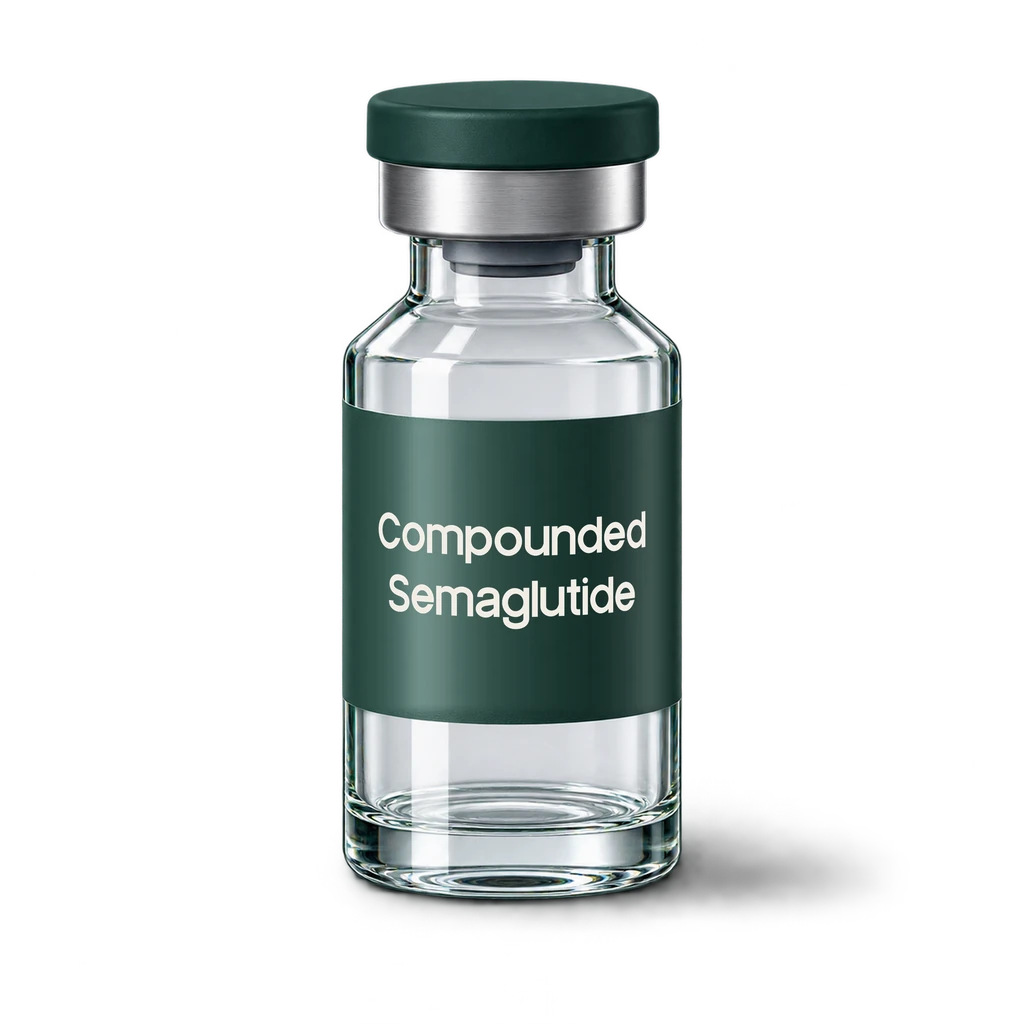
Compounded Semaglutide — Microdose
from $145/moon the 12-month plan
A clinician-managed semaglutide program that stays within a lower dose range than Halwel’s standard weight-care program. It is a weekly under-the-skin injection for eligible adults—not a supplement, a shortcut, or a proven longevity treatment.
Compare plan lengths
$145/mo
$1,740 charged once today · nothing renews · you save $408
Check your eligibilityA licensed provider reviews every intake before treatment is prescribed.
FormulationCompounded semaglutide (microdose protocol)
How Compounded Semaglutide — Microdose works
We would rather you understand the medicine than take our word for it.
It changes appetite signaling
GLP-1 receptors are present in areas of the brain involved in appetite. Semaglutide can reduce hunger and food intake, although the response varies from person to person.
It supports glucose-dependent control
When blood sugar is elevated, semaglutide increases insulin secretion and reduces glucagon. These actions help the body manage glucose after food arrives.
FDA Wegovy prescribing information, Clinical Pharmacology §12
It can slow digestion
Semaglutide can delay stomach emptying. That may contribute to fullness—and to nausea, heartburn, constipation, or other digestive symptoms.
The care strategy
Why someone might consider a lower-dose regimen
A lower-dose approach may appeal to someone seeking a more measured medication effect rather than the greatest possible appetite suppression or weight loss. The aim is to use the smallest dose that produces a worthwhile response without automatically escalating toward the maximum.
You want gradual, modest progress
You are looking for some help managing hunger and portions—not necessarily the largest or fastest possible change.
You are concerned about tolerability
You may have found GLP-1 treatment or previous dose increases difficult to tolerate and want a more cautious, clinician-guided approach. A lower dose can still cause side effects and is not guaranteed to be easier.
You want the dose matched to your response
If a lower dose is already producing meaningful results, you and your clinician may decide there is no reason to increase it automatically.
You are comfortable with an uncertain or smaller effect
Lower doses may produce less weight loss or no worthwhile response. This approach prioritizes finding an individually useful dose—not reproducing the results of full-dose trials.
A lower-dose regimen is not inherently safer, side-effect-free, or proven to deliver the same results as standard dosing. Whether it is appropriate depends on your health, goals, prior treatment experience, and clinician’s judgment.
- ADA Standards of Care in Diabetes—2026
- Eldor et al., Diabetes Care, 2025 — gradual/flexible semaglutide titration pilot RCT
Evidence, in context
What the science says
The science is strongest for how GLP-1 medicines work. Evidence for individualized lower-dose care is developing; evidence for this exact compounded regimen is not established.
- Established
Semaglutide has dose-dependent effects
Randomized trials show that studied semaglutide doses can affect appetite, blood sugar, body weight, and adverse effects. Higher doses may produce larger average effects, but they can also increase treatment burden.
- Established practice
Dosing can be individualized
Current professional guidance supports starting low, titrating according to response and tolerability, and using less than the maximum approved dose for some patients.
Sources- ADA Standards of Care in Diabetes—2026
- Eldor et al., Diabetes Care, 2025 — flexible-titration pilot RCT
- Emerging
Lower-dose treat-to-target care is being studied
A large retrospective cohort reported meaningful weight loss with individualized lower semaglutide doses plus intensive behavioral support. Because it was not randomized and had substantial attrition, it is encouraging—not conclusive.
Sources- Seier et al., Diabetes, Obesity and Metabolism, 2025 — retrospective cohort with intensive behavioral support — not randomized
- Not established
This exact program has not been validated in a large trial
No large randomized study has established the weight-loss, safety, cardiovascular, or longevity results of Halwel’s compounded microdose regimen. Results from FDA-approved products and studied doses should not be presented as a promise for this program.
Sources- FDA — compounded semaglutide information
- Komé et al., Diabetes Care, 2025 — commentary on fractional dosing — not trial evidence
- Tejera-Pérez, Diabetes Care, 2025 — commentary — practice is emerging, no randomized trials
Established mechanism. Evidence-supported personalization. Emerging lower-dose research. No claim that microdosing itself is a proven therapy.
Thoughtful care in four clear steps
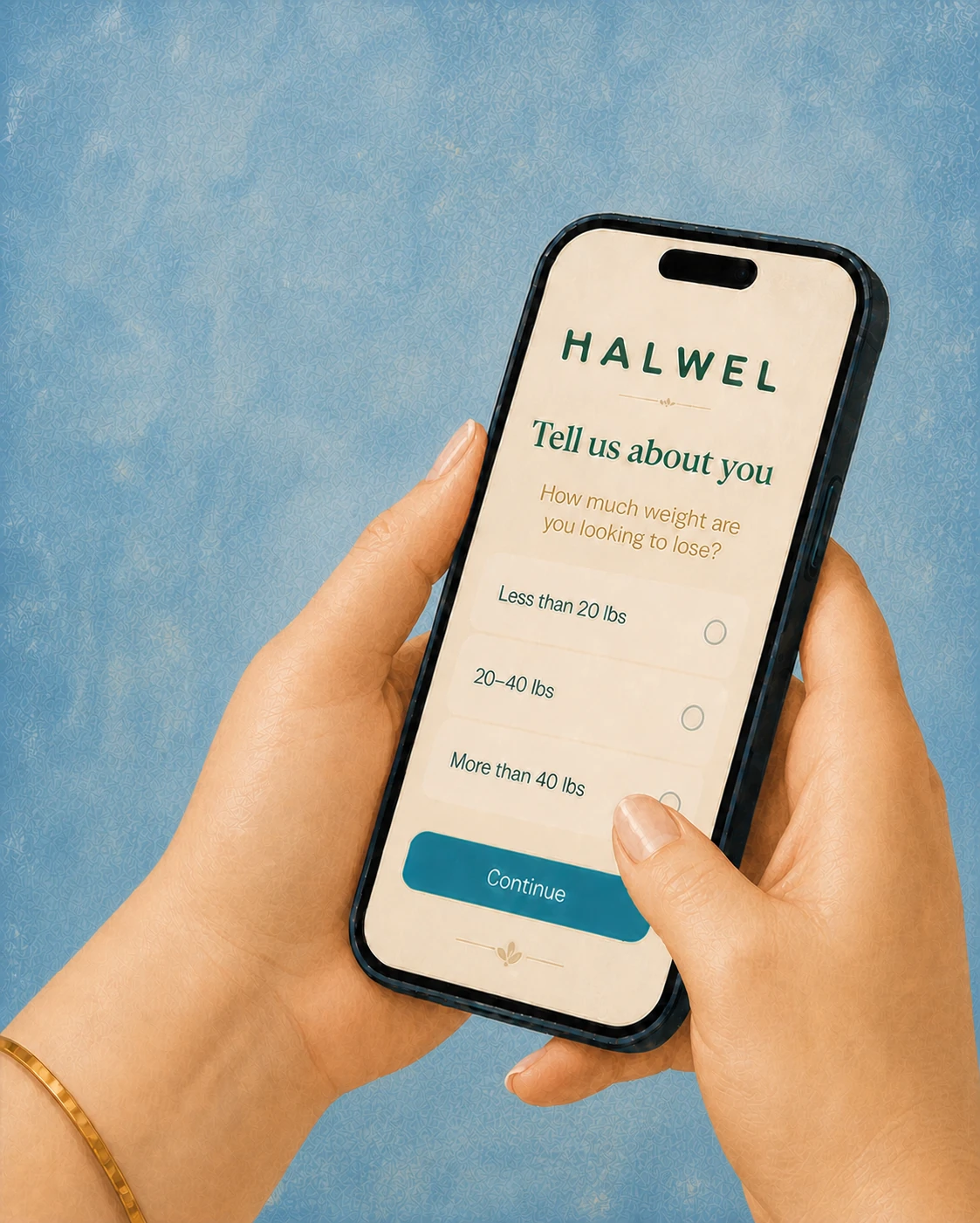
Medical intake
Tell us about your health history, current medications, goals, and prior treatment. This is a medical screening, not a product order.

Clinical review
A licensed clinician in your state independently decides whether treatment is appropriate. A prescription is not guaranteed.

Medication delivery
If prescribed, a licensed pharmacy prepares your medication and ships it in discreet packaging. Compounded medications are not FDA-approved.

Ongoing care
Use your portal for check-ins, dose questions, side effects, refills, and treatment changes. Your clinician can adjust or stop treatment based on your health and response.
Compounded Semaglutide — Microdose questions
What patients ask most before starting. If yours isn't here, your clinician answers it during review.
Halwel offers a clinician-managed, lower-dose program using compounded semaglutide. If prescribed, you receive medicine for a weekly under-the-skin injection, clinical review, ongoing dose management, injection supplies, and shipping. It is not a supplement or an FDA-approved microdose product.
It means the program stays within a lower clinician-approved dose range than Halwel’s standard semaglutide weight-care program. “Microdose” is not a standard medical definition. Your prescription and pharmacy label—not the product name—tell you the exact dose.
No. A smaller dose may be easier for some people to tolerate, but this exact program has not been shown in a large comparison study to prevent side effects. Nausea, vomiting, constipation, gallbladder problems, inflammation of the pancreas, and other risks can still occur.
There is no reliable number for this program. The large studies often quoted for semaglutide used different doses and did not test Halwel’s compounded microdose care. Some people may lose weight, some may notice a smaller change, and some may not have a worthwhile response.
No longevity benefit has been proven. The program has not been shown to slow aging, extend life, or prevent disease in otherwise healthy adults. Any prescription should begin with a clear medical goal that can be followed over time.
No. Wegovy and Ozempic are FDA-approved products with their own ingredients, injection devices, approved uses, doses, and instructions. Halwel’s product is compounded for an individual prescription. It is not a generic version, is not FDA-approved, and has not been proven to produce the same result.
It is injected into the fatty tissue just beneath the skin once a week. Follow the pharmacy label and your clinician’s instructions. Confirm both the prescribed milligrams and the matching mark on the syringe before every injection.
Every plan includes medication if prescribed, clinical review, ongoing dose management, injection supplies, and expedited shipping. There is no separate membership fee. Your total charge and payment timing are shown before you commit.
Halwel’s listed plans are cash-pay. Insurance coverage and reimbursement vary, and compounded medicines are often not covered. Ask your plan administrator whether your purchase is eligible for HSA or FSA funds.


When you’re ready, begin with a short medical intake.
A licensed clinician will review your health and decide whether treatment is appropriate.